
— Capex Software for Forecast Accuracy —
How a high-growth company automated actuals and fast-tracked forecasting
Challenge: Inaccurate Forecasts Snowball into Bigger Problems
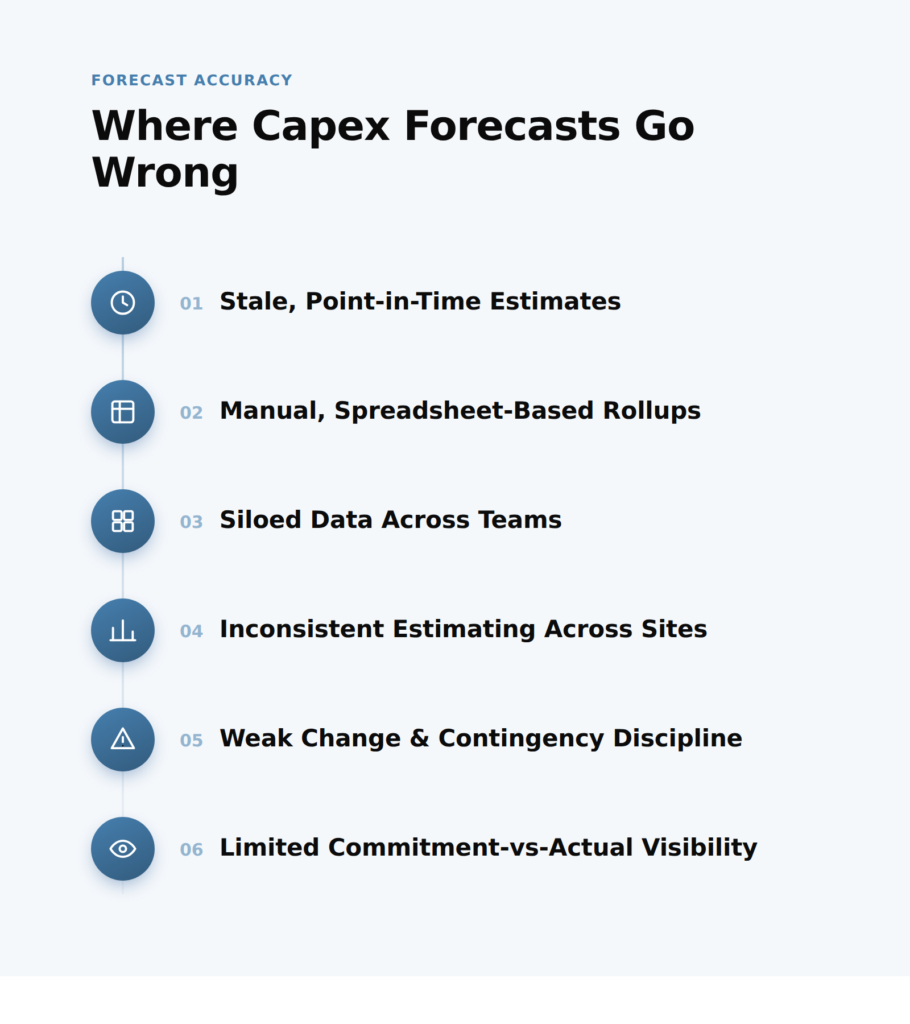
Their finance teams spent days every month pulling actuals from their ERP, chasing project owners for updated estimates, and reconciling figures that didn’t match across sources. The result was a forecast that was technically complete but a lagging indicator of where the portfolio was, not where it was going.
Meanwhile, project-level changes got captured in a local spreadsheet and made their way into the forecast weeks later, if at all. Perhaps more troublesome, overly optimistic estimates were baked in and had a way of surviving far longer than the assumptions that supported them.
The result: capital forecasts that looked reasonable midyear produced uncomfortable conversations in Q4. Moreover, projects that were never going to finish on time or on budget were reviewed too late to course-correct.
Opportunity: Always Current, Always Attributed
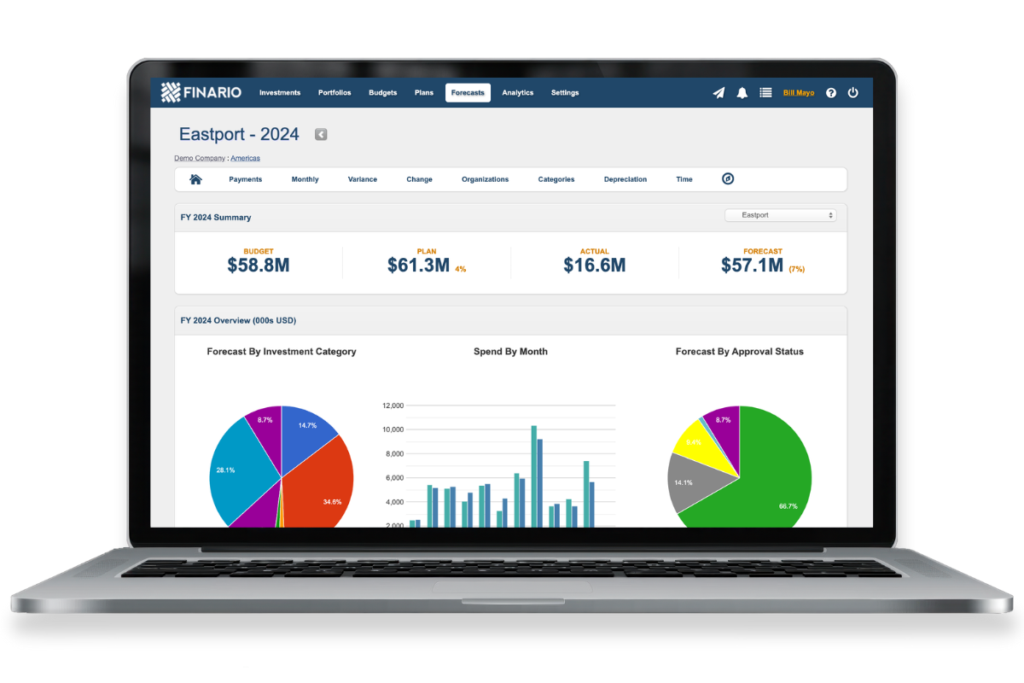
They quickly learned that accurate forecasting is less about discipline and more about data. With Finario, actuals from their ERP and financial systems are now synced in real time, creating a live variance view at every level of the portfolio.
Result: When a payment record arrives, the system matches it to the right cost line, updates the forecast, and flags the project for re-approval if the new projection exceeds the approved amount beyond tolerance.
Additionally, accurate period-level cash flow forecasting gives treasury and FP&A the granularity they need to manage liquidity without waiting for month-end close.
A 5-Point FORECAST ACCURACY Action Plan
Replace manual reconciliation with automated actuals integration.
Connect Finario to your ERP and financial systems so actual spend is matched to project budgets continuously. Every dollar committed, invoiced, or paid updates the forecast automatically, eliminating the reconciliation cycle and the reporting lag that comes with it.
Require re-forecasts at defined project milestones for material projects.
Point-in-time estimates can decay fast. So require project owners to update cost forecasts at key stage gates on material projects: for example, engineering release, equipment and vendor contract awards, major procurement commitments, site/facility readiness, and installation/commissioning start. Don't wait for year-end to discover that a project's trajectory is going to be a concern.
Use scenario modeling to forecast under uncertainty.
Build scenario modeling into your forecasting cadence so finance and operations can quickly assess the impact of delays, scope changes, or capital reallocation decisions before they're locked in.
Forecast cash flow by period, not just by project total.
A project that's on budget but spending faster than planned creates a cash flow problem even when the numbers look fine in aggregate. Structure your forecasts to show spend phasing by month and quarter, mapped against actual disbursements.
Set variance thresholds that trigger alerts, not just reports.
Variance analysis shouldn't be something you do at month-end after the damage is done. Configure automated alerts that flag cost, schedule, and scope variance at defined thresholds, such as 10%, 15%, or whatever your organization's tolerance dictates.
Trusted by industrial enterprises worldwide
Reporting is much faster, and I have much more confidence in the data.
LEAD FINANCIAL ANALYST FOR FP&A, GLOBAL CONSUMER PRODUCT MANUFACTURER
We’re understanding aggregated returns on our investments better, and it’s a lot easier for us to track progress.
VP Global Operations Medical Products Manufacturer
We can now see purchase orders and spend against each project quickly, and the information is updated automatically every day.
MANAGEMENT INFORMATION SYSTEMS DIRECTOR, Metals & Mining
Solution Plan: Schedule a Demo
Get a guided walkthrough of Finario, tailored to how your leadership team prioritizes, chooses, manages and tracks strategic capital investments.